


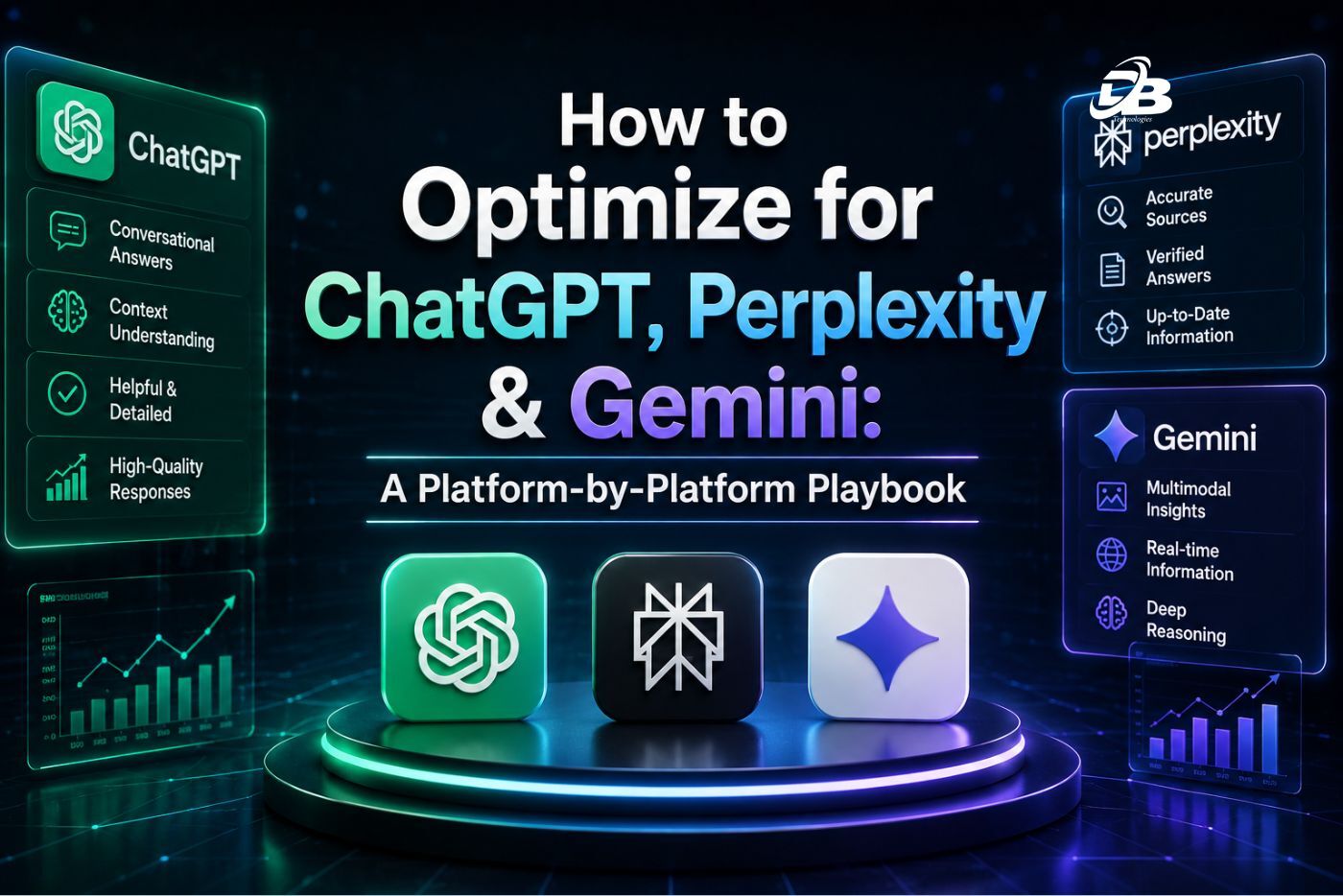
Type a question into ChatGPT these days and see what happens. You get an answer. Not ten blue links to click through one by one. That’s the whole game now, and it’s why so many site owners are scrambling to figure out how to optimize for AI search engines before their competitors get there first.
Truth is, the rules for getting cited by an AI aren’t quite the rules for ranking on Google. They overlap in places. However, if you are just implementing traditional SEO, you are missing out on a lot if ChatGPT catches the attention. So this guide walks through what actually works, platform by platform, instead of just guessing.
Wait, Is This Even Different From Regular SEO?
Kind of, yes and no. Traditional SEO chases a ranking position. AI search optimization, some call it GEO (Generative Engine Optimization), others say AEO (Answer Engine Optimization), chases something else entirely: getting your content pulled straight into the answer itself.
Old SEO asked, “how do I get to position one?” This newer game asks a different question: “how do I become the sentence the AI decides to quote?”
Small difference on paper. Huge difference in practice.
Old SEO chases a ranking. AI search optimization chases a citation.
And no, you can’t skip traditional SEO and jump straight to this. Most AI tools still lean on existing search indexes to find sources in the first place.
For instance, Bing uses a significant portion of ChatGPT’s web results, while Gemini primarily relies on Google’s own index. If your site already can’t be seen by search engines, then you won’t be able to fix it by using any of their AI-specific tricks. Traditional SEO is basically the entry ticket. AI optimization is what happens once you’re already in the room.
The Ground Rules That Work Everywhere
A few habits pay off no matter which AI engine you’re chasing, before getting into the platform-specific stuff.
Answer the question fast. Don’t build up to it over three paragraphs. AI models are grabbing chunks of text, and if your best insight is sitting in paragraph six, it’s probably not making the cut.
Try what some SEO folks call <u>the island test</u>: take a paragraph, rip it completely out of context, and see if it still holds up sitting alone. Picture it stranded on a desert island with nothing around it. If it opens with “This proves that…” or “They found…” without saying who “they” are, that paragraph needs work. Self-contained chunks get lifted into AI answers far more easily than ones leaning on the sentence before them.
Structure matters too. Numbered steps. Short FAQ sections. Tables where they actually make sense. Messy walls of text are hard for anything, human or machine, to pull information from cleanly.
It’s all about freshness, particularly for Perplexity, which appears to give more importance to it than the other two. Even if the older version is more comprehensive in its workings, its three-year-old guide will be out-competed by an equivalent guide that was updated last month.
And one that’s underrated, not mentioned: be referred to somewhere else, not only linked. AI citation systems seem to care almost as much about being named on other reputable sites (review platforms, forums, industry blogs) as they do about backlinks in the old-school sense.
Okay. Onto the individual platforms.
How to Optimize for ChatGPT
ChatGPT fetches a lot of real time web results from Bing, which is why the indexing of that platform is important and more than people realize. If Bing doesn’t even know about your site, that’s step one that needs to be corrected. Not step five.
Other than that, there are a couple of things that help:
– Question-style headers. Change your heading from ‘Content Optimization Tips’ to ‘How Do I Optimize My Content for ChatGPT?’. It reflects the way people use the chat box in real life.
– Keep answers tight. Two to four sentences that actually resolve the question under each header, not a meandering intro before you get to the point.
– Third-party validation matters, and it matters a lot. Reviews, comparison posts, mentions on other trusted sites. ChatGPT seems to weigh outside confirmation of your claims pretty heavily, probably because it can’t just take your word for it.
– A crawlable site. Ensure that your robots.txt file isn’t blocking GPTBot or OAI-SearchBot. Occurs far more frequently than you imagine, typically when someone has restrictions on a broad crawler in place years ago and they forgot about.
How to Optimize for Perplexity SEO
Perplexity works a bit differently. It behaves more like an active research assistant that goes out, reads multiple sources, and shows its work with visible citations right there in the answer. That transparency is actually good news for you, because you can test it directly: ask Perplexity a question in your niche and see whose content it cites. If it’s never you, that’s a real, measurable gap, not a hunch.
A few things tend to move the needle for Perplexity SEO specifically. Recency is the big one. Perplexity leans on freshness harder than the other two platforms, and updating your key pages every few months (not once a year) genuinely seems to help.
Writing also needs to be dense and specific: named statistics, concrete examples, real numbers instead of vague claims. Content that sounds like it was written by a real person that has worked in this field, instead of a person summarizing all other content.
It’s also important for external references. Perplexity relies heavily on review sites, news media, and industry blogs , so having mentions on reputable third-party pages can be just as impactful as content on your own pages. And it’s more likely to be drawn to long, organized articles rather than short marketing blurbs.. Depth wins.
How to Optimize for Gemini
Gemini, and the AI Overviews that show up right inside Google search results, leans heavily on Google’s existing index and Knowledge Graph. So if you already rank reasonably well in classic Google search, you’re most of the way there already, which is a bit of a relief honestly.
Structured data is where to focus first. FAQ schema, HowTo schema, product schema, all of it helps Gemini understand exactly what your content is and connect it to known entities. Gemini also isn’t purely text-based the way ChatGPT and Perplexity mostly are, so multimodal content pulls weight here. Images, video (YouTube especially, given who owns it), well-labeled diagrams, these can all factor into what gets surfaced.
Two more things worth doing:
– Be consistent in your website and what you say about your brand, products and key concepts on third party websites so Google’s Knowledge Graph can make sense of it.
– Don’t neglect the basics. The same concepts of “old school” SEO such as backlinks, page experience, and topical authority apply here more or less.
How Do You Even Know If It’s Working?
But a good question, and one that many guides don’t talk about. But unlike Google rankings, there is no dashboard to simply come back and say, ““You were cited on ChatGPT for 40 queries this month.Unlike Google, there isn’t any dashboard to simply come back and say, ““You were cited on ChatGPT for 40 queries this month.”
” You’ve got to go looking for it yourself, and honestly, it’s a bit manual.
A few ways to check:
– Run your own queries. Once a week or so, ask ChatGPT and Perplexity questions a potential customer might type. Are you showing up? Are your competitors? A simple spreadsheet works fine if you want to track it over time.
– Watch for branded search spikes. If someone reads about your brand inside an AI answer, they often turn around and Google your name directly afterward. A jump in branded search traffic in Google Search Console is a decent proxy signal, even if it’s indirect.
– Check referral traffic. Some AI platforms, Perplexity especially, do pass along click-through traffic. New referrals from perplexity.ai or chatgpt.com showing up in your analytics is a direct win worth noting.
None of these are perfect measurements. This whole space is still young, and honestly, the tools for tracking it properly are still catching up. But rough signals beat no signals, and checking in monthly at least tells you whether you’re moving in the right direction.
Also, don’t miss out to read a blog on, “How to Track Brand Mentions in AI Search Results?”
Start Here If You’re Short on Time
Here are some ideas on what you can do to make things easier this week.If you’re feeling overwhelmed, just begin with a small goal. Some short listed items to consider:
– Use the island test on the ten most visited pages of your site.
– Avoid beginning paragraphs with the words “this” or “it” or “they”, unless they are used in connection with a noun or pronoun that refers to a specific thing.
– Use FAQ schema markup to add a short FAQ section to your two or three most important pages.
– Check your robots.txt file and ensure that the robots GPTBot, PerplexityBot and Google-Extended are not denied access.
– Get some questions answered by ChatGPT and Perplexity in your niche. If it’s not you, that tells you exactly where to focus next.
Wrapping Up
None of this is about chasing some flashy new trick. If someone asks, ‘how to optimize for AI search engines, the secret is the same as the secret of good writing: Be clear, be specific, and answer the question, rather than going around in circles.
Yes, the per-platform tweaks are important, too. However, the principles are the same in all places. You should write as though you are trying to explain something to your dear friend that they don’t know.
Begin with the “easy wins” listed above, monitor which pages are cited and make the necessary changes. AI search is not going anywhere. It’s best to get used to it early, as you will be doing less of that later on.




 +971 582 871635
 +971 582 871635