

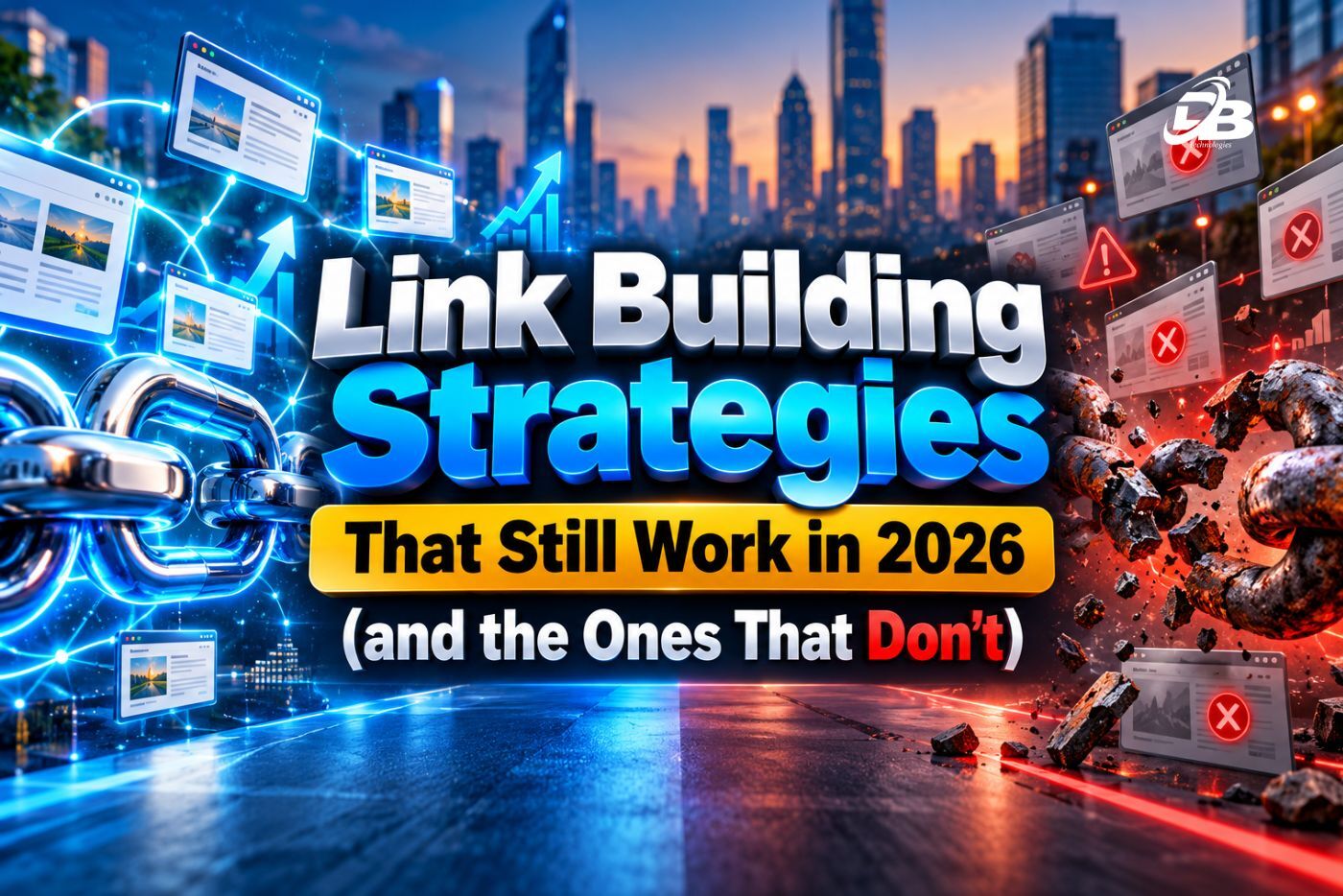
Honestly, link building has a bit of an image problem. One crowd keeps saying it’s dead. Another crowd will happily sell you 500 links for fifty bucks. Neither is giving you the full picture, in my opinion.
Links still matter, probably more than people admit. What’s different is how you earn them, and if you’re still running a 2019 playbook you’re likely wasting hours (maybe even hurting your site). So here’s a plain-English tour of the link building strategies 2026 seems to reward, plus the old tricks worth dropping today.
Do Links Even Matter Anymore?
AI summaries now sit on top of a lot of searches, so it’s fair to wonder whether links still count for anything.
As far as anyone outside of Google can tell, they do. Google has long claimed that links are a key determinant of the pages it trusts, and AI tools appear to rely on widely referenced and cited sources in the web. Nobody links to you? Then you’re pretty much invisible, to people and to machines.
Quality is what moves. A single link from a respected site in your niche can beat fifty from random directories, and that’s been true for a while. Think of links as recommendations. A stranger says you’re great, fine, whatever. Your favourite chef says it, and suddenly you’re listening.
A caveat, however: no one can guarantee the value of a link now. Anyone giving an exact number is taking a guess, or selling something.
Digital PR: Still the Star
Digital PR gets most of the attention right now, and it kind of deserves it. You stop begging for links. Instead, you provide journalists and bloggers with something they’d want to report on, such as a new statistic, opinion, tool or comment to the news.
Start small:
– Sign up for a free journalist request service and answer queries in your area.
– Keep replies short and quotable, two or three sentences tops.
– Be quick. Reporters are on deadline, and the first decent answer often wins.
Will you land every one? Nope. Maybe one in ten, and that’s on a good month (the “one in ten” is a rough guess, so don’t hold me to it). But the links that do come tend to sit on news sites and trade publications, which is the whole point.
Timing does most of the work here, so keep an eye on news in your own niche.
Original Data (Even Tiny Data)
People love linking to numbers. Give them a number nobody else has and you’ve basically built a link magnet.
Budget isn’t really the issue. Survey a hundred customers. Dig through your own sales data and share the trends, anonymised of course. Or pull public figures together in a new way, like a “state of the industry” snapshot, then put it on a clean page with charts people can embed.
Small business owners may be asked by a local accountant about their most stressful aspect of tax season. A fitness coach might discuss for example which New Year resolutions actually make it till February, and this is the reality. Small, specific and a little odd tends to do better than big and generic.
Fair warning though: a ten-question survey sent to your mailing list isn’t real research, and journalists know it. Be upfront about the sample size. It makes you look more honest, not less. Of all the link building techniques on this list, original data needs the most effort up front, but it also seems to pay off for the longest.
Guest Posts That Don’t Feel Spammy
Guest posting isn’t dead. Mass-produced guest posting is. The gap between the two comes down to intent: write for sites your audience actually reads, give their readers something useful, and don’t stuff in keyword-heavy anchor text.
A few quick rules:
– Read the last ten posts on a site before you pitch.
– Pitch one specific headline. “I’d love to write for you” usually gets deleted.
– Link to yourself once or twice, only where it fits.
– Skip any site with a price list for “sponsored guest posts”.
It’s slow, people-based work. It’s also a decent example of white hat link building, the kind that earns trust and not just a URL.
Broken Links and Resource Pages
Old, but still good. Identify pages in your niche that are linking to dead pages, and serve up your content as an alternative. You’ll know if a link is broken by a free browser extension that you’ll get while surfing.
For communications via e-mail: Keep it short and polite:
– State your name in one line.
– Say the broken link – not be snarky about it.
– If it’s a good fit, offer your page as a trade, but only when it is a proper match.
Resource pages work in much the same way. Search “[your topic] resources” or “useful links” and see if your guide belongs there. Success rates hover around 5 to 10 percent according to most of the outreach write-ups out there, though your niche could be way different. Still, these links tend to stick around for years.
Outreach Emails People Actually Answer
Since a few of these ideas depend on cold emails, a quick word on writing them. Most outreach is bad. It’s long, it’s generic, and it’s obviously copied to fifty other people.
What seems to work better is boring: use the person’s name, mention one specific thing you liked on their site, say what you’re offering in a sentence or two, and stop. If you hear nothing, follow up once after a week. Twice is pushy. Three times and you’ve probably lost them for good.
Podcasts, Interviews and Expert Quotes
Podcasts and webinars typically provide a link in the show notes, along with some exposure. Pitch one clear topic with two or three talking points. Hosts are busy, so make their job easy.
Local and Community Ties
Sponsor a local event. Join a trade association. Team up with a nearby school or charity. These links are super relevant and hard for competitors to copy, and plenty of associations list their members on their site, which is a free, trusted link just sitting there.
Then there’s unlinked mentions. Search your brand name, and if somebody mentioned you without linking, send a polite thank-you and ask if they’d add one. Probably the easiest win in this whole post.
Make Something Worth Linking To
Here’s something nobody loves hearing: outreach gets way easier when you’ve got something people want to reference. Calculators, templates, checklists, free tools, a guide that really does beat page one.
Ask yourself before you build anything, would someone in my industry bookmark this? If not, make it more useful. A dull page with brilliant outreach still gets ignored, while a genuinely helpful page with so-so outreach gets linked more than you’d expect. I’d bet on the second one every time.
What Doesn’t Work Anymore
Old link building techniques worked mostly because search engines were easier to fool. That’s not true now, and Google’s spam systems have got pretty good at spotting patterns. Here’s what to stop doing.
Buying links in bulk. Cheap packages are the quickest route to a penalty, or at best nothing happening. If the price looks too good to be true, the links are coming from junk sites.
Private blog networks. PBNs, those webs of fake sites built only to pass link value, used to be the big secret. Now they’re a flashing warning sign.
Mass AI-written guest posts. Fifty generic articles blasted at any site that’ll take them? Editors spot that a mile off, and search engines probably do too.
Big reciprocal swaps. A bit of cross-linking between real partners is fine. Endless “link to me, I’ll link to you” deals look manipulative.
Comment and forum signature spam. Never worked well. Those links are usually nofollow anyway, and you’ll just annoy people.
Low-quality directories. A few respected industry directories can be okay. Hundreds of random ones is pointless.
Over-optimised anchor text. If every link says “best digital marketing company in Dubai”, it looks fake. Mix in your brand name, plain URLs and natural phrases.
Shortcuts are tempting, I get it. But white hat link building survives algorithm updates for the simple reason that it’s built on being useful, not sneaky.
Good Link or Bad Link?
Not sure a link is worth chasing? Whenever you weigh up link building techniques like the ones above, ask these four questions:
– Is it relevant? A link from a site in your industry beats a random high-authority site.
– Is it editorial? Did someone choose to link, or did you pay or trade?
– Does the site have real readers? A site nobody visits probably won’t help.
– Would you be happy if it sent visitors? If yes, it’s likely a good one.
Fail two or more and move on.
How Long Until Something Happens?
Patience. Most people see early movement after three to six months of steady effort, and bigger results often take nearer a year, though that’s a rough rule and it depends a lot on your niche and your competition. Slow, yes. But links compound. The article you’ve read this month continues to work even after you’ve “forgotten” it.
Keep an eye on a couple of things: Is there growth in the number of referring domains per month, are they quality domains, and are there improvements in rankings and organic traffic? This can be done with a simple spreadsheet.
Have A Simple Weekly Routine
Feeling overwhelmed? Try roughly three hours a week:
– Monday: reply to two or three journalist or expert requests.
– Tuesday: check for unlinked mentions and send a friendly note.
Wednesday: send five personalised outreach emails, whether broken links, resource pages or guest pitches.
– Thursday: finish one asset that is link worthy such as a stat page, template or guide.
– Friday: Take notes, of what you got, then make adjustments and record.
Don’t try to do it all in one go. Three hours a week for six months will get you further than a mad three-day rush.
Wrapping up
If you have to remember just a few things: Add value to your links, value is what’s important, know the people in your industry and don’t do anything that looks like a quick-and-easy trick.
Link building tactics 2026 are quite similar with that of the marketing strategies that have been effective. Content, integrity and patience. The tricks fade. The basics hold up.
Just take one of the ideas, perhaps the unlinked mentions or the journalist’s response in a hurry and give it a shot today. Little things make a big difference. And, if you stick to ethical white hat link building, you’re creating something that will stand up and not dissolve due to the next update.



 +971 582 871635
 +971 582 871635