


Ask any agency owner which part of the job they’d happily hand off, and link building usually wins. It’s slow. It’s repetitive, and half the emails you send never get a reply.
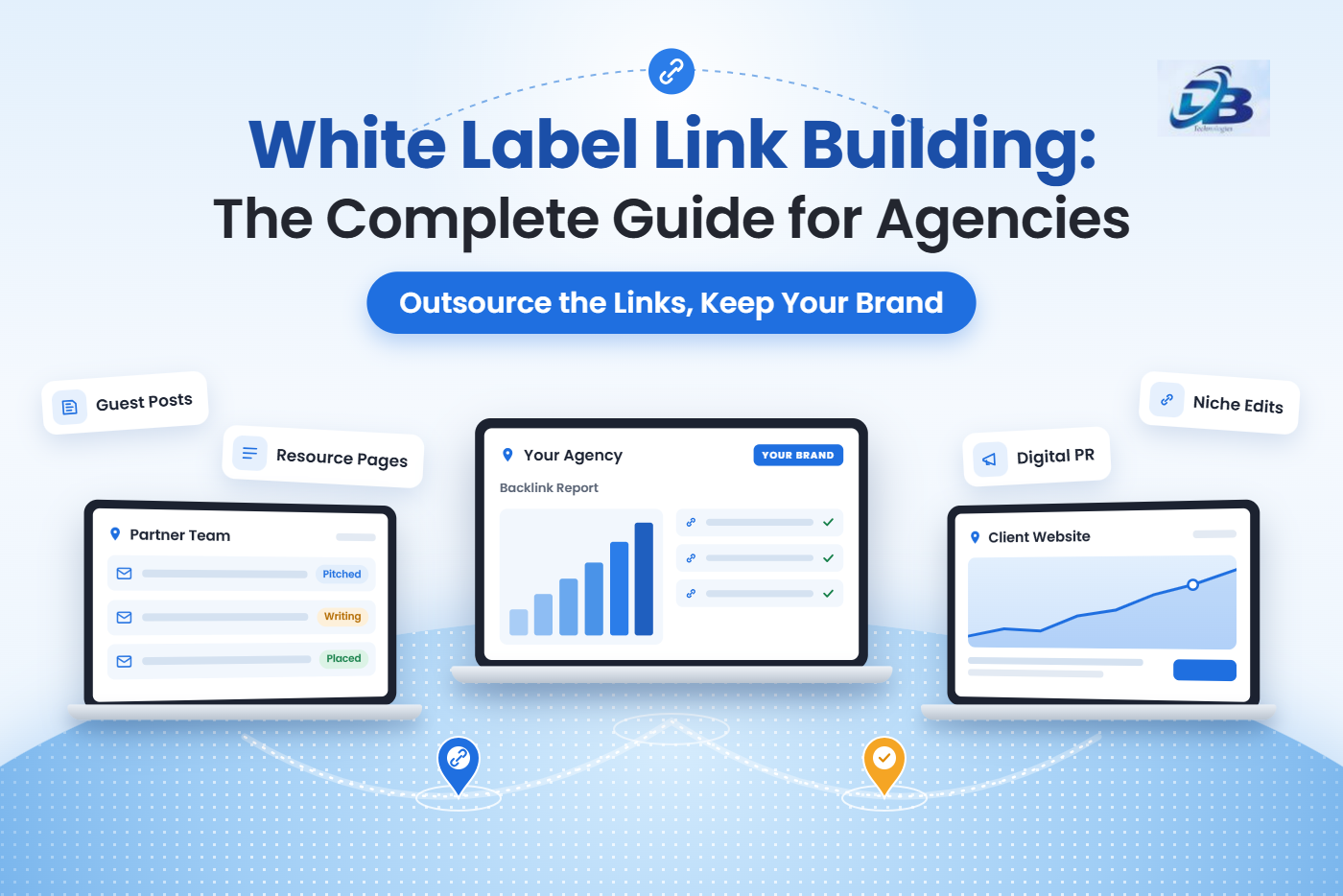
That’s the gap white label link building fills. A specialist team finds the sites, writes the pitches and secures the placements, while your agency delivers the results under its own name.
Your clients see your branding. You skip the grind.
This guide covers how the model works, what it tends to cost, and how to pick a partner without getting burned. Near the end, there are a few practical tips for the stuff that trips agencies up.
So, what does it really mean?
Simply put, another company is creating backlinks for your clients and you’re presenting them as if they were created by you. The provider remains hidden all the time. No name, logo or mention of the reports in the emails or the invoice/referencing the same.
Imagine a restaurant that buys bread from a local bakery. People have been praising the restaurant and the bakery continues to bake and bake.
It’s also known as outsourced link building because the outreach itself, the content and the placements are all outside your team. . It sits inside the wider world of SEO reseller services too, where you sell work that a partner delivers behind the scenes.
Why agencies bother with it
It saves time. Proper outreach means research, follow-ups and a fair amount of patience. A partner already has the systems, so your team can spend those hours on strategy and client calls.
It lets you scale without hiring. Say three new clients sign on in the same month. Recruiting and training outreach staff could easily take a quarter. With a partner, you raise the order and carry on.
You borrow their relationships. Established providers can have a connection with editors and site owners personally. Those contacts are built over a number of years and won’t come with the new employee.
Your margins get more flexible. Earning a living plus tools and software subscriptions add up quickly. Outsourcing makes those fixed costs variable, and increases as your client base does.
Clients stay longer. Clients stay longer. Backlinks still play an important role in the search engines’ authority algorithms. Present them effectively and you’re likely to see results that will keep them coming back.
How white label link building works, step by step
Each provider is somewhat different, but most are along the same lines.
– Onboarding. You share the client’s website, target keywords, main competitors and any rules on tone or restricted topics. A vague brief gets vague results, so put real effort in here.
– Audit and strategy. The provider looks at the current backlink profile and hunts for gaps, risky links and quick wins. From there they suggest a plan that suits the client’s industry.
– Prospecting. Next comes the search for relevant sites. Good prospecting checks topical fit, genuine traffic and editorial standards. A shiny authority score on its own isn’t enough.
– Content and outreach. Depending on the method, that could mean guest posts, digital PR, resource page links or niche edits. The provider writes the content and pitches the site owners.
– Placement and tracking. Once a link goes live, it gets logged with the URL, anchor text and date.
– Branded reporting. Finally, you receive reports carrying your name and logo. Send them straight to the client, or add your own commentary first.
Link building methods you can outsource
Not every tactic suits every client. A partner may provide some or all of the following:
– Guest posting: Articles written for other blogs that are related, and linked back to your client.
– Digital PR: Stories or data that would be considered newsworthy and would generate a bit of coverage from a journalist.
– Niche edits: a link that is placed inside an existing article that is already relevant.
– Resource page links: a listing on a curated page of helpful sites.
– Broken link building: your client’s content offered as a replacement for a dead link.
A decent partner will explain which method fits which goal. If someone pushes the same package on every client you have, be wary.
What does it cost?
Prices vary a lot. This is not a negative thing; it only means you need to do some comparison shopping. The majority of provider’s charge in one of three ways:
– Per link: you pay for each placement. Handy for testing a new partner.
– Monthly packages: a set number of links each month, which is predictable and easy to resell.
– Custom retainers: bigger campaigns, often involving digital PR, get their own quote.
The lowest price is not always the best choice. If you have sites that are substandard, the rock bottom prices will be indicative of that. And poor sites will hurt a client’s rankings, not help them.
Then there’s your own markup. If you’re buying SEO reseller services at wholesale rates, you’ll want to resell at a price that covers account management and still leaves a healthy profit. Many agencies price in the strategy and reporting they add on top.
How to choose the right partner?
This is the decision that matters most. A bad partner can damage a client’s site and your reputation along with it. Before signing anything, run through this list.
Ask for sample links and reports. A trustworthy provider will happily show past placements. Check whether the sites look like real publications with real readers.
Look at their quality rules. Do they set minimum traffic or relevance standards? Do they avoid private blog networks? You want a clear yes to that second question.
Check how open they are. You should know where links are going, what anchor text is used and how content gets approved. Vague answers are a warning sign.
Run a small pilot. Order a handful of links for one client. You’ll learn about quality, communication and turnaround without much risk.
Confirm the branding is genuine. Reports should be fully brand able, and nothing they send should reveal that a third party exists.
Read a sample article. Stuffed with keywords? Reads like a robot wrote it? Walk away.
Watch how fast they reply. Slow answers during the sales stage rarely improve after you’ve paid.
Red flags worth walking away from
Some warning signs show up again and again:
– Guaranteed rankings by a specific date
– Enormous link counts for a tiny price
– No sample sites or reports on request
– Links placed on sites that cover everything, from casino tips to kitchen tiles
– A flat refusal to explain their process
Spot one or two of these and take a step back. A cheap mistake today can become an expensive clean-up job later.
Practical tips on how to get the best out of it.
You’ve picked a partner. Now the relationship needs to work.
Write a proper client brief. Include brand voice, off-limits topics, competitor names and priority pages. The more context the provider has, the better the placements.
Chase relevance, not volume. Don’t base your success on the number of backlinks you have; one link from a reputable industry site can be more valuable than ten from blogs. .
Keep anchor text natural. A healthy profile mixes branded anchors, plain URLs and descriptive phrases. Over-optimised anchors look suspicious.
Track more than rankings. Watch referral traffic, leads and the visibility of the pages that received links. Rankings matter, but business results matter more.
Set expectations early. Results typically build over several months, not days, and clients should hear that before the first link goes live.
Check quality every quarter. Spot-check a sample of links. Are they still live? Is the site still relevant? Ten minutes of checking can save a client relationship.
Fix the site first. The best backlinks are those that connect pages that are well worth linking to. Fix the content of the site and the load time if it is thin or slow to load, before investing in links.
Mistakes agencies make with outsourced link building
Even experienced agencies slip up. These are the usual culprits.
Handing it all over and disappearing. Outsourcing doesn’t mean ignoring. The client relationship is still yours, so review the work regularly.
Overlooking industry rules. Health, finance and legal sites need extra care. Make sure your partner understands how sensitive those topics are.
Switching providers constantly. Chasing the lowest price means you never build a stable workflow, and stability helps both quality and speed.
Skipping the contract details. Get turnaround times, replacement policies for removed links and confidentiality terms in writing. Boring, yes. Also protective.
Overpromising. You control the process, not the search engine. Promise transparency and effort rather than specific positions.
The following is a quick and made-up example.
Picture a small agency with eight clients and one part-time outreach person. Two clients ask for more links in the same month, and suddenly that person is drowning. The owner has two options. Hire someone, which takes weeks and costs real money before a single link lands. Or hand one client’s campaign to a partner and see what happens.
Plenty of owners pick the second, and it’s a sensible way to test the water. If the pilot goes well, they expand it. Otherwise, they have not lost that much.
Would it be a wise decision for your agency?
It’s a good fit if you want to grow without expanding your payroll, or if you already sell SEO but struggle with the outreach side. Agencies that want a full menu of SEO reseller services often find it the quickest way to get there.
If link building is your specialty and your team loves it, you may prefer to keep it in-house. Plenty of agencies land somewhere in between. They do strategy and high-end campaigns themselves and let the placements be done by their partner.
In either case, be truthful with your capabilities and your expectations.
Final thoughts
Done well, this model frees your team and lets you offer a complete SEO service without building a department from scratch. Done badly, it puts client sites at risk. The difference mostly comes down to the partner you choose.
Look for openness, relevant sites and clear reporting. Keep your clients in the loop and start small and review regularly. If you see outsourced link building as a business partner, then it can be a more dependable part of your business if you are careful, but if you consider it a get-rich scheme, it will simply not work.
Narrow it down to two or three providers, get samples and do a small pilot. 12 sales calls or one month of actual results.




 +971 582 871635
 +971 582 871635