


Agentic AI ,autonomous AI tools that can think and act on our behalf , is no longer science fiction. By 2026, these intelligent agents are reshaping how people search the web and shop online. For SEO professionals, this means a big shift in strategy. Traditional SEO tactics (keyword stuffing, infrequent audits, and passive backlink building) simply won’t cut it when AI chatbots and virtual assistants start making purchase decisions for customers.
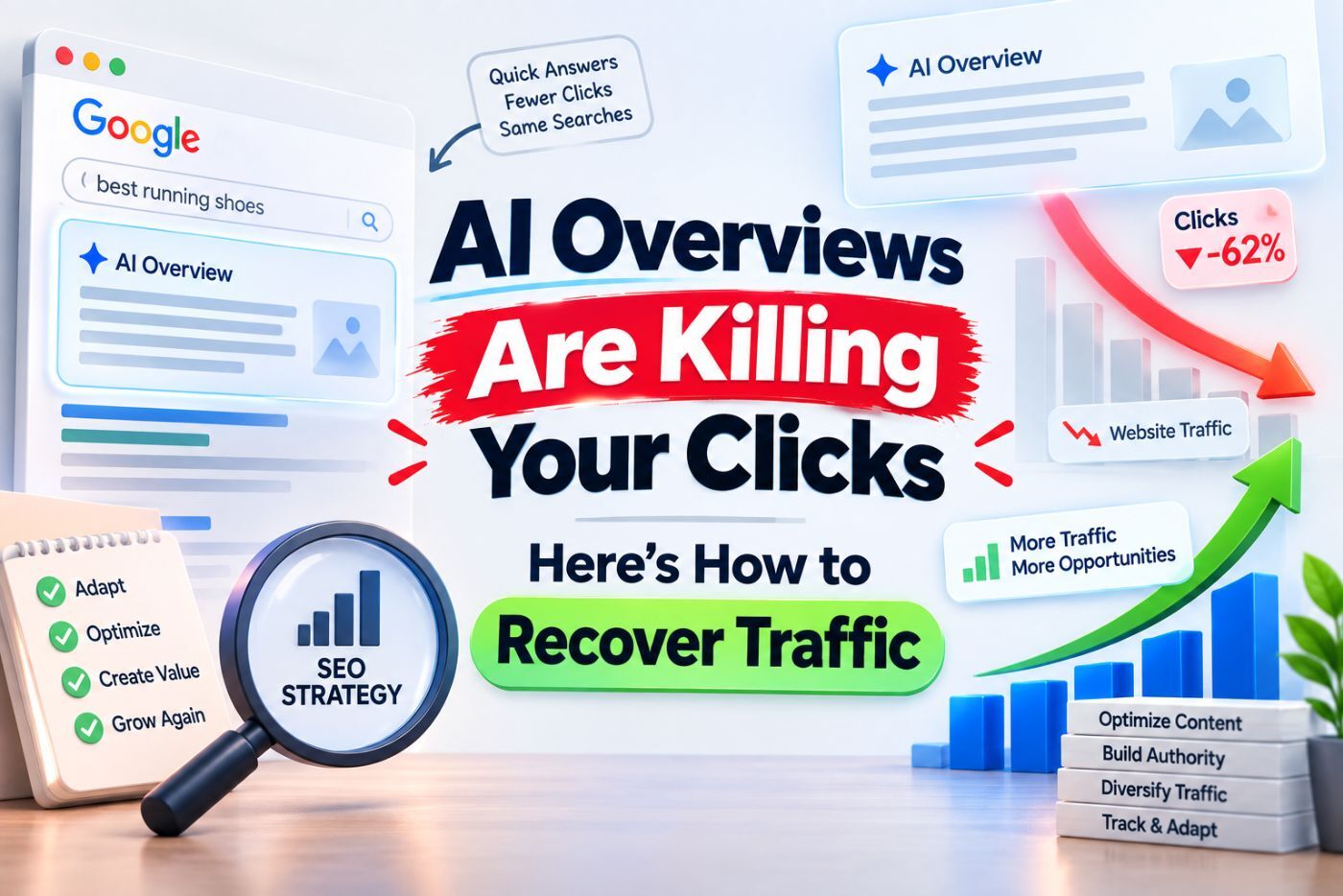
In fact, recent data show that 58.5% of Google searches now end without a click, because AI-powered summaries (like Google’s AI Overviews) answer queries right on the results page. In other words, getting to “page 1” is no longer enough if the user never clicks through your site. Agentic AI in SEO is the response: it’s about using proactive AI agents to keep your content visible, trusted, and chosen by these new automated searchers.
One guide defines agentic SEO as “the use of proactive AI agents to continuously optimize digital content for discoverability”.Traditional system waits for a specific prompt and follows instructions step by step. In agentic AI , the system is given a high-level goal and independently chooses which tools and steps to use to achieve it.
This change matters because the search landscape is rapidly evolving. AI chatbots and search assistants don’t browse links, they synthesize answers. One expert warns: “The user asks a question, the AI synthesizes content from trusted sources, and one answer is presented”. If your brand isn’t cited in that AI-generated answer, it doesn’t matter how high you rank – you’ll be left out of the conversation.
This “zero-click reality” means SEO pros must focus less on being #1 on Google and more on being eligible to be chosen by AI. As a recently published article puts it, the question becomes not “do we rank well?” but “are we eligible to be chosen at all?”. In other words, you have to make sure an AI agent wants to recommend your site when it acts on a user’s behalf.
Why Agentic AI Matters for SEO Teams
SEO teams have already felt the pressure of AI. People expected to save a significant amount of time using generative tools such as ChatGPT and started to jump on it, only to endlessly edit and re-prompt the tool. That is the main distinction: agentic AI will help to close the gap between adoption and efficiency.
Traditional AI tools can spit out content fast, but an agentic system can act on insights—doing research, grouping keywords, writing drafts, and optimizing pages in one go. This shifts marketers’ roles from prompt-engineers back to strategists. You guide the AI’s goals and it handles the grunt work.
Industry data backs this up.It is reported that AI-driven processes can accelerate company processes by approximately 30-50 percent and reduce redundant tasks by approximately 25-40 percent. Simply put, the time previously spent on boring activities (data collection, simple analysis, formatting, etc.) could reduce significantly. And it is required: search is evolving at an accelerated rate.
Agentic AI offers a solution by keeping your optimization in sync with shifting trends.Rather than waiting for traffic to drop, an agentic system can continuously align content with evolving user intent and AI-driven search features. In other words, businesses can stop firefighting dropped rankings and instead have AI agents prevent the fires from starting.
How Agentic AI Changes Search Behavior
The rise of agentic AI isn’t just a backend improvement—it’s rewriting how search works. We are moving from simple links to AI-powered answers. Today’s search engines (and AI assistants) are blending results, chat responses, product carousels, and more.
What does this look like? Think of queries where Google now directly answers you. For example, if someone asks “best running shoes for wide feet,” a Google Overview or AI agent might give a list of options or a summary instead of just linking to blog posts. In that world, ranking #1 on a search results page isn’t enough.
You have to be the answer. One site warns, “the next SEO revolution won’t happen on Google. It’ll happen inside AI agents”.
Another big shift: zero-click searches. According to industry research, a majority of high-intent queries (especially product discovery or answer-seeking) are now resolved fully within AI search interfaces. Users often don’t need to click your page at all; instead, the AI agent tells them the answer and maybe links to sources.
The implication: If you’re not visible to AI, you’re invisible to that user. As Botify notes, “if you aren’t mentioned in AI answers, you’re effectively invisible to potential consumers, regardless of how good your content is”. So the rules of SEO change: it’s no longer just about traditional rankings or click-through rates. Now it’s about AI visibility—showing up as a trusted source in answer engines and chatbots.
We can already see this happening. Voice assistants and AI chat interfaces are effectively search engines now. And “AI platforms primarily find products in three ways” – by crawling sites, using APIs (Model Context Protocols), or ingesting product feeds. If your site’s data is not structured for these, you’ll miss out. In short, marketing is shifting from “rank well on Google” to “are we eligible to be chosen by an AI agent?”. That subtle change—from focusing on clicks to focusing on eligibility—will define SEO success in this new era.
Agentic AI in Ecommerce: AI-Powered Discovery
Online shopping is one of the clearest places where agentic AI is emerging. Imagine your customer says to their phone, “Get me vegan leather sneakers, size 9, under $100,” and an AI does all the work. This is not science fiction: it’s already happening. CMSWire warns that search is being rewritten for AI buyers – brands now must “optimize product data for AI agents as discovery shifts from SEO to intent-driven automation”. In practice, this means you need to treat your product catalog like an API for AI. Each product’s attributes (color, size, material, sustainability info, etc.) must be exhaustively detailed so an agentic system can parse them.
For example, Google recently introduced an “AI Mode” on Google Shopping that embodies agentic behavior. The AI Mode enables a user to provide certain specifications of items (size, color, budget, etc.), and the system will take it up. The AI agent can automatically place in the cart, enter checkout information, and even use Google Pay to make the purchase, once the price decreases (a match). That’s agentic AI: it takes actions for the customer. The customer just approves or tweaks the final decision. This real-world example shows how e-commerce is heading toward automation.
The takeaway for SEO/eCommerce teams is huge. Instead of only thinking about Google Keywords, you now optimize for AI agents that “crawl your site to find products that match a user’s query”. To capture that traffic, retailers must expose highly structured and updated product data.
BigCommerce and partners like Feedonomics are even feeding product information directly to AI platforms like Perplexity or OpenAI, so those systems can give your products first shot in answers.
In summary, AI-powered discovery means search is moving from keywords to intent. Agents look for “shoes with X features under Y price,” not just “best shoes.” They will favor products with detailed intent-aligned data. Botify sums it up: “Product feeds still matter, but they’re not competitive differentiators. In AI search, discovery is driven by [user] intent, not just specs”. The brands that succeed will provide rich, answer-ready product info that mirrors how real people think and ask questions.
SEO for AI Agents: Practical Tips
What should the businesses do then? The bad news is: your basics of SEO are still important, however, new layers on it are required. AI agents are a new audience to please, not only human visitors. The following are some of the practical steps:
Structure Your Content: To give your content boost, rely on a structured data. Add schema markup and clear entity tags to your pages. In the case of ecommerce, there should be product schema of all items, and all attributes (brand, color, size, etc.) of each item. For articles, use FAQ and Q&A schema where relevant. This helps AI understand exactly what your content is about.
Be an Authority/Trusted Source: Brand signals now influence AI choices. Strong domain authority, good reviews, mentions in media, and up-to-date content help agents trust you. For example, SEO specialists note that AI agents still rely on “domain authority and trust signals to evaluate sources” just like search engines do. So continue building backlinks and public reputation – public relations and social buzz are now SEO inputs.
Create Original, Valuable Content: AI systems filter out duplicates. Make sure your content adds something new. It is recommended paying attention to original thoughts, valuable data, and professional commentary in such a way that you can make your pages outstanding. For instance, you can write your own research and case studies or a unique angle, rather than repeating what everyone knows.
Optimize for AI Comprehension: Write clearly and comprehensively. Include definitions, clear headings, and precise answers. Botify suggests producing “answer-ready content” that an agent can quote. In practice, this could mean adding a clear summary or bullet list answering common questions about a product or topic. Tools that reverse-engineer AI behavior also recommend heavy use of headers, lists, and direct question-answer sections.
Update Product Data and APIs: Update your catalog now in the case of e-commerce.. Open up live inventory and price (where possible, through APIs) so that an agent does not recommend out of stock products.
Measure AI Visibility, Not Just Clicks: Due to the fact that many searches do not translate into clicks nowadays, monitor your presence in an answer powered by AI. Certain systems have become available displaying the frequency with which your brand is mentioned in AI summaries or chatbots.Invest in tools or analytics that measure this new KPI. SEO guru Botify advises: focus on AI visibility as a performance indicator instead of just CTR. If you’re being quoted or your product is being recommended by AI, that counts as success.
Plan for Agentic Transactions: Especially for retail, support AI shoppers. For example, update your checkout flows to accept tokenized payment systems, as networks like Visa and Mastercard are introducing “agent pay” tokens for bots. Ensure your site can handle one-click purchases and adjust fraud settings accordingly. While not strictly SEO, being ready for automated purchases means capturing orders from bots.
Real-world example: Google’s AI-powered shopping “AI Mode” perfectly illustrates these trends. When a user engages AI Mode and sets their criteria, Google’s agent will do tasks on their behalf – adding a product to the cart and even finalizing checkout through Google Pay. This shows agentic AI in action: it automates discovery and purchase. For SEO and marketing, it means that optimizing content and product data isn’t just about winning a click, but actually being in the shortlist that an AI shopper chooses.
Future of SEO with Agentic AI
Looking ahead to 2026 and beyond, most experts agree the new frontier of SEO is adapting to AI agents. The core question will shift from “How do we rank on page one?” to “How do we get chosen by AI?”. An expert predicts that by 2026, “the bulk of ‘customers’ visiting your website… won’t be people — they’ll be AI agents”. The savvy brands will treat AI as a key customer segment.
This means staying visible without needing clicks. In practice, AI search engines will answer queries directly. If your brand isn’t part of that answer, it might as well be invisible to the user. A site puts it bluntly: “the future of SEO isn’t about ranking higher. It’s about being understood and preferred by AI”. In other words, content must be formatted and authored so that an AI agent “gets” it immediately. If not, the agent will simply move on to the next source.
Another major shift is that brand and domain authority become even more important. When AI is provided with an answer, it tends to refer to several sources to create credibility. It is important to have an excellent overall presence in terms of PR, reviews, user-generated content, and good domain authority. If the world isn’t talking about you, AI won’t bring you up either. So integrate your SEO strategy with public relations and customer satisfaction efforts.
Finally, e-commerce product discovery will redefine “site structure”. Traditional product feeds list price, color, etc. In the AI era, these feeds must also include rich context. Botify says AI will look for products “enriched with purpose, benefits, and context, not just specs”. For 2026, they predict: product data will be the new battleground, and AI discovery rewards feeds aligned with human intent. This echoes our earlier tips: tag products with all the details an intelligent shopper (or agent) would ask for.
In summary, agentic AI is already here and growing fast. Businesses that adapt will treat AI agents as partners: they will build processes so AI can easily consume and act on their site’s information. Individuals who disregard such a change can see how their visibility is eviscerated by AI-based searching. The challenge of marketers is obvious: to unite the old SEO advantages (quality content, links, performance of the site) with the new agent-oriented strategies (organization of data, focus on clarity and trust, intent optimization). Companies that move early to become “answer-ready” and agent-friendly will capture the lion’s share of future traffic.
By 2026, the phrase “future of SEO with agentic AI” won’t be just a curiosity—it will define competitive edge. In essence, SEO will evolve into AI-driven search optimization, where success means being the obvious choice for a machine as it searches, recommends, or even buys on behalf of users. The future belongs to those who adapt now.
Wrapping up
Remember to keep realistic expectations. Agentic AI is powerful, but it won’t suddenly make overnight miracles across every industry. Some fields (standardized products, tech info) will feel it sooner than others (complex medical, regulated finance). The key is to improve your foundations now better content, better data, better user experience, so when AI-driven search fully takes off, you’re in a position of strength. Remember one SEO leader’s advice: agentic AI is accelerating trends we’ve seen for years (personalized discovery, click less search, data emphasis). It’s not a totally new puzzle, just a bigger one.
In the end, think of agentic AI as adding a new decision-maker into the funnel: software that acts on users’ behalf. The brands that explain this reality to their teams and prepare accordingly will have the upper hand. Focus on being eligible not just visible in AI-driven search results.


 +971 582 871635
 +971 582 871635